
The American Association of Orthodontists (AAO) recommends every child have their first orthodontist visit by age 7. That may sound early, but it’s the right window: your child’s first permanent molars and front incisors have typically come in, giving Dr. Frank Hann and Dr. Kristen Hann enough of a preview to spot issues with bite, spacing, and jaw growth.
Here’s the good news: most 7-year-olds won’t need braces yet. The first visit is evaluative, not treatment-focused. Think of it as a baseline check, one that helps us catch small concerns before they become bigger ones.
At Hann Orthodontics, this first appointment is a Free Exam. No pressure, no obligation. Dr. Frank Hann and Dr. Kristen Hann simply take a look, share what they see, and let you know whether your child needs treatment now, monitoring over time, or nothing at all.
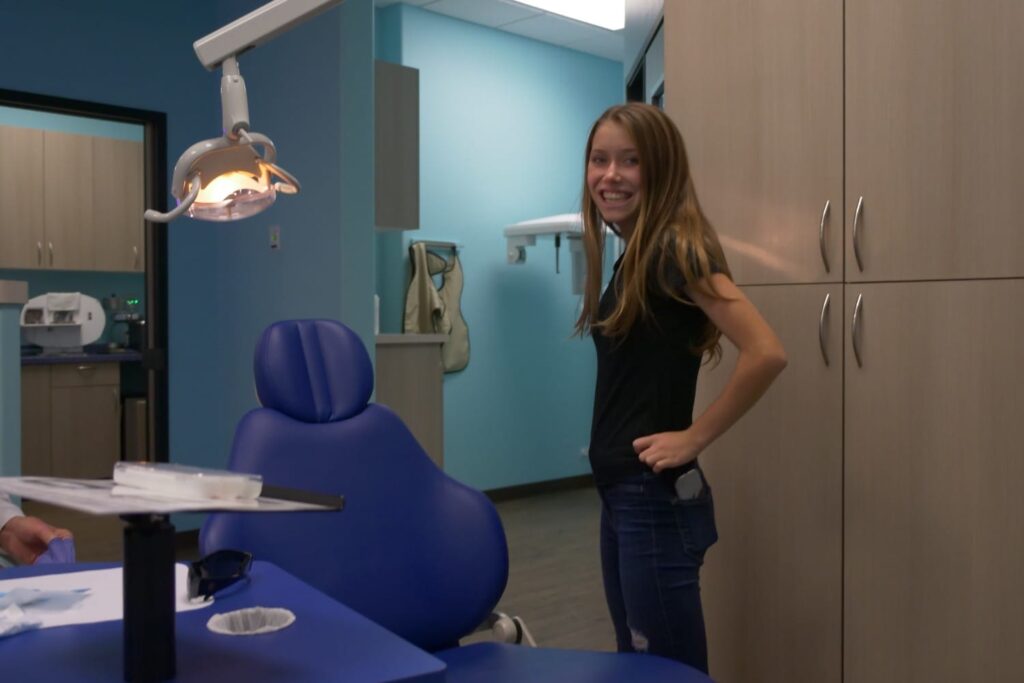
What Happens at Your Child’s First Orthodontic Visit
Your child’s first visit is designed to feel more like a friendly conversation than a clinical exam. We keep things light, answer every question, and make sure your child feels comfortable from the moment they walk in.
Here’s what to expect during the appointment:
- Dental and medical history review. We’ll ask about your child’s overall health, habits (like thumb-sucking), and any dental work they’ve had done.
- Visual exam. Dr. Frank Hann or Dr. Kristen Hann will look at your child’s teeth, gums, jaw, and bite alignment.
- Digital x-rays or 3D scans, if needed. These give us a clear picture of tooth position, jaw structure, and adult teeth still developing beneath the surface.
- Growth and eruption assessment. We evaluate how the jaw is developing and how permanent teeth are coming in.
- Findings discussion. We’ll walk you through what we see, whether that means treatment now, monitoring, or simply checking back in a year.
- Q&A time. You and your child can ask anything. No question is too small.
Most first visits take around 45 minutes to an hour. Your child stays awake, comfortable, and involved the entire time. Many parents are surprised at how much their kids enjoy the experience.
Benefits of Early Orthodontic Evaluation
Catching orthodontic concerns early gives your child a real advantage. When we spot developing issues while the jaw is still growing, we have more tools available and better outcomes are often possible.
Here’s what early evaluation can do for your child:
- Guide jaw growth naturally. The bones in a child’s face are still developing between ages 7 and 10. Gentle guidance during this window can prevent more involved work later.
- Correct harmful habits. Thumb-sucking, tongue thrust, and chronic mouth breathing can all shape the mouth and jaw in ways that create bite issues. Early intervention helps redirect these patterns.
- Reduce risk of injury. Kids with protruding front teeth are more likely to chip or fracture them during sports or play. Repositioning those teeth earlier lowers that risk.
- Simplify future treatment. When Phase 1 addresses foundational issues, Phase 2 treatment (if needed) is often shorter and more straightforward.
- Support better airway and sleep. A narrow palate or crowded jaw can affect breathing, especially at night. Widening the palate early may improve airflow, reduce snoring, and support healthier sleep.
- Build confidence. Kids notice their smiles. Addressing visible bite or spacing concerns early can make a real difference in how your child feels at school and with friends.
Early doesn’t always mean treatment. Sometimes the biggest benefit is simply knowing what to watch for. Dr. Frank Hann and Dr. Kristen Hann have transformed thousands of smiles over the past 30+ years, and much of that success starts with catching things early.
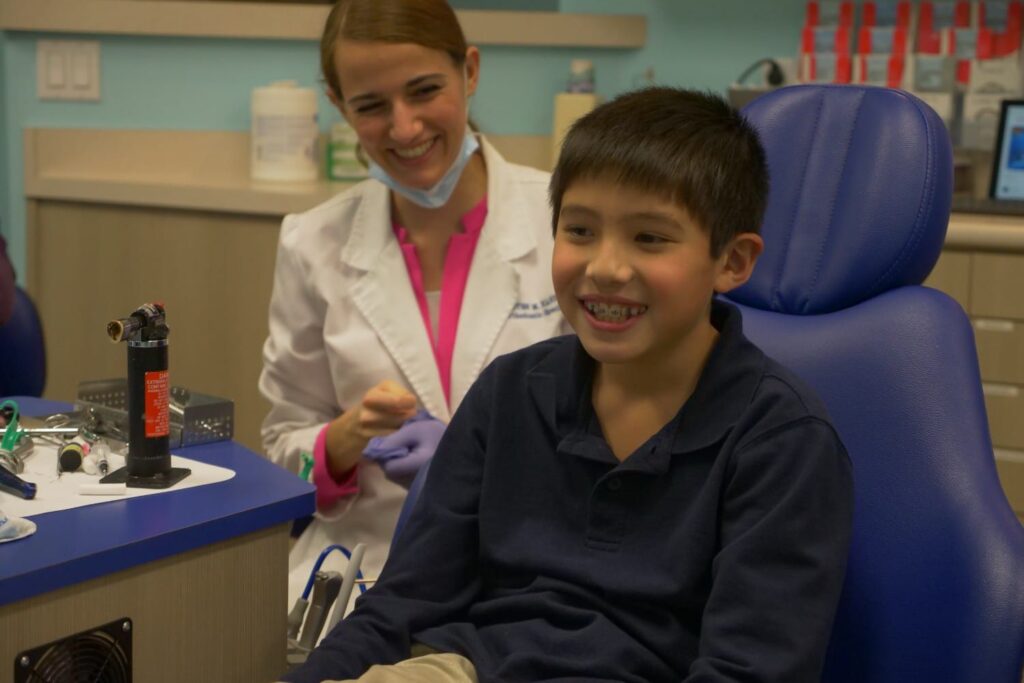
Phase 1 vs. Phase 2 Treatment: What’s the Difference?
Not every child needs two phases of orthodontic care. In fact, many kids skip Phase 1 entirely and go straight to Phase 2 during their preteen or teen years. Here’s how the two phases compare:
| Feature | Phase 1 (Interceptive) | Phase 2 (Comprehensive) |
|---|---|---|
| Typical Age | 6-10 years | 11+ years |
| Main Goal | Guide jaw growth, address bite issues | Align all permanent teeth |
| Teeth Present | Mix of baby and permanent | All (or nearly all) permanent |
| Common Appliances | Palatal expanders, space maintainers, partial braces | Metal braces, clear braces, Invisalign Teen |
| Duration | 6-12 months typically | 12-24 months typically |
| Who Needs It | Kids with significant bite or growth concerns | Most teens getting braces |
Phase 1 focuses on the foundation: jaw width, room for incoming teeth, and correcting crossbites or severe overbites. Phase 2 is the finishing work: straightening every permanent tooth into its ideal position.
At Hann Orthodontics, Phase 2 treatment options include traditional metal braces, clear braces, and Invisalign Teen. Dr. Frank Hann and Dr. Kristen Hann will help you choose the option that fits your teen’s lifestyle, personality, and treatment needs.
Cost and Insurance Considerations
The initial exam at Hann Orthodontics is free, so you can get a professional evaluation and clear answers before making any financial commitment. If treatment is recommended, we’ll walk you through every cost involved so there are no surprises.
A few things worth knowing about the financial side:
- Phase 1 typically costs less than full Phase 2 treatment, since it’s shorter and more focused.
- Many dental insurance plans include orthodontic benefits, especially for children. Our team helps file your insurance claims.
- HSA and FSA funds can usually be applied toward orthodontic care.
- Flexible payment plans with low monthly payments (and no money down options) make treatment affordable for most families.
- Early evaluation may lower total treatment cost over time by addressing issues before they require more involved work.
We also offer Chase Health Advance financing for families who prefer extended payment options.
Signs Your Child May Need to See an Orthodontist Sooner
While age 7 is the general recommendation, some signs suggest an earlier visit is a smart idea. If you notice any of the following, it’s worth scheduling a Free Exam:
- Early or late loss of baby teeth. Both can signal that permanent teeth aren’t coming in on schedule.
- Difficulty chewing or biting. Kids shouldn’t have to work hard to eat normal foods.
- Mouth breathing or snoring. Chronic mouth breathing can point to airway or jaw issues.
- Thumb-sucking past age 5. Prolonged sucking habits can reshape the roof of the mouth and push teeth forward.
- Crowded, misplaced, or blocked-out teeth. When teeth don’t have room to come in properly, we can often create space early.
- Jaws that shift, click, or appear misaligned. Any unusual jaw movement or asymmetry deserves a closer look.
Trust your gut. If something looks off to you, a quick evaluation can bring peace of mind.

Frequently Asked Questions
Is age 7 too young for braces?
Age 7 isn’t too young for an evaluation, but it’s often too young for braces. Most children who visit at 7 don’t start treatment right away. The visit is about assessing growth, checking bite development, and identifying any issues that benefit from early attention. If treatment is needed, it’s typically limited and focused.
How do I know if my child needs braces?
Some signs are visible, like crowded teeth, gaps, an overbite, or an underbite. Others are subtle, like difficulty chewing, mouth breathing, or a jaw that shifts when biting down. The most reliable way to know is a professional evaluation. Dr. Frank Hann and Dr. Kristen Hann offer a Free Exam that gives you a clear answer.
What’s the difference between a pediatric dentist and an orthodontist?
A pediatric dentist focuses on your child’s overall dental health: cleanings, cavities, gum care, and routine checkups. An orthodontist specializes in tooth and jaw alignment, bite correction, and appliances like braces or Invisalign. The two work together, and your pediatric dentist may be the first to suggest an orthodontic visit.
Do I need a referral to see an orthodontist?
No referral is needed. You can schedule your child’s Free Exam at Hann Orthodontics directly, without a dentist’s referral. Many families come in on their own after noticing a concern, and many others come at their pediatric dentist’s suggestion.
What happens if we wait until my child is older?
Waiting isn’t always an issue, but in some cases it means missing the window when jaw growth can be guided naturally. Issues that could have been addressed with a simple appliance at age 8 sometimes require more involved treatment at age 14. An early evaluation just gives you the information to decide.
Are early orthodontic visits covered by insurance?
Since the initial exam at Hann Orthodontics is free, insurance isn’t a factor for the first visit. If treatment is recommended, many dental insurance plans include orthodontic benefits for children. Our team helps verify your coverage and files claims on your behalf.
Ready to find out if it’s time for your child’s first orthodontic visit? Schedule a Free Exam with Dr. Frank Hann and Dr. Kristen Hann at our Brentwood office today. We serve families throughout Brentwood, Antioch, and East County, and we’d love to meet yours.